
Basic Italian phrases for travel
26 phrases · pronunciation · audio
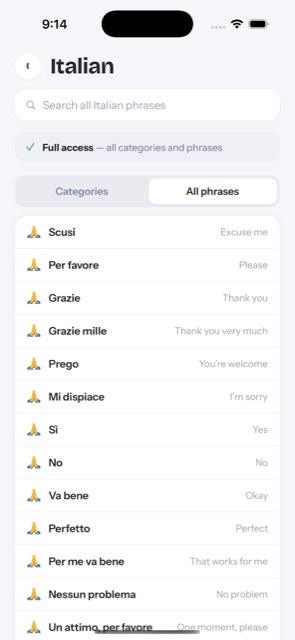
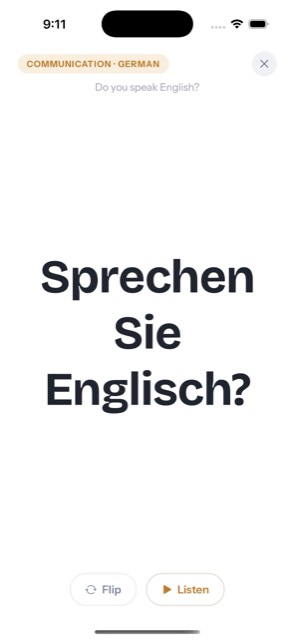
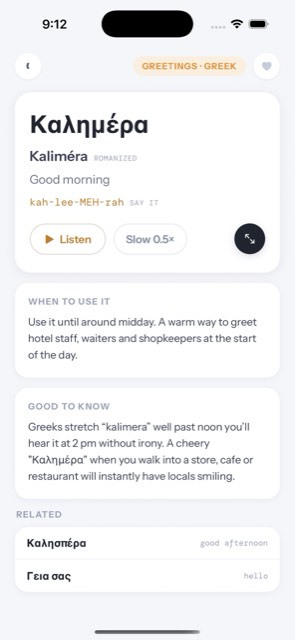
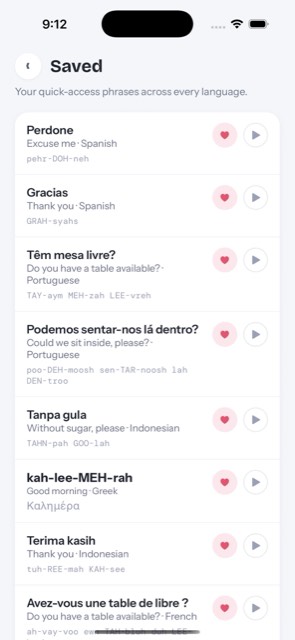
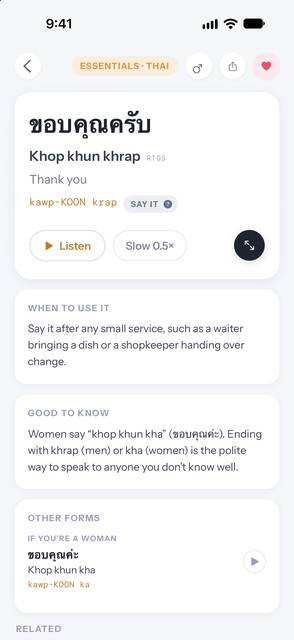
Heading to Italy, San Marino and parts of southern Switzerland? These are the 26 phrases worth knowing before you land. The greetings and small courtesies that come up on day one, starting with “Salve”. Every one shows how it's written, how to say it, and has audio you can play.
These are free here and free in the app, in every language. Nothing to sign up for.
Essentials
-
Excuse me
Scusi
SKOO-zee
Use it to get someone’s attention before a question, or to squeeze past on a crowded metro.
The polite form for strangers. With friends it becomes “scusa”.
- Casual Scusa SKOO-zah
-
Please
Per favore
pehr fah-VOH-reh
Add it to any order or request.
-
Thank you
Grazie
GRAH-tsyeh
Say it after any small service, such as a waiter bringing a dish or a shopkeeper handing over change.
-
Thank you very much
Grazie mille
GRAH-tsyeh MEEL-leh
Use it when someone has gone out of their way to help and you want to show extra gratitude.
Literally “a thousand thanks” - the standard strong thank-you in Italy.
-
You’re welcome
Prego
PREH-goh
Use it after someone thanks you. “No problem” is a more casual alternative.
“Prego” is a Swiss Army word: you’re welcome, after you, come in, how can I help. You’ll hear it everywhere.
-
I’m sorry
Mi dispiace
mee dees-PYAH-cheh
Use it to apologise when you’ve made a mistake or caused someone trouble.
-
Yes
Sì
see
Useful for confirming a price or accepting an offer.
-
No
No
noh
Use it to turn down an offer or an extra you didn’t ask for.
-
Okay
Va bene
vah BEH-neh
Use it to agree to a plan, a price, a meeting time or a pickup point.
-
Perfect
Perfetto
pehr-FET-toh
A warmer “okay” for when a suggestion suits you.
-
That works for me
Per me va bene
pehr meh vah BEH-neh
Use it to accept a suggestion, such as a later table or a different room.
-
No problem
Nessun problema
nes-SOON proh-BLEH-mah
Use it when someone apologises to you, or to wave off a small inconvenience.
-
One moment, please
Un attimo, per favore
oon AHT-tee-moh pehr fah-VOH-reh
Buy yourself a few seconds at the counter while you find your wallet or decide what to buy.
-
Could you help me, please?
Mi può aiutare, per favore?
mee pwoh ah-yoo-TAH-reh pehr fah-VOH-reh
The polite way to open a request for assistance.
Greetings
-
Hello
Salve
SAHL-veh
An everyday greeting polite enough for staff and strangers. One of the first things you should learn in any language.
The polite, any-time greeting when you’re unsure. In practice locals mostly say “buongiorno” or “buonasera”.
-
Hi
Ciao
chow
The casual “hello” for friends and anyone you know well.
Hello and goodbye in one, but it’s informal. With staff and strangers, “salve” or “buongiorno” is safer.
-
Good morning
Buongiorno
bwon-JOR-noh
Use it until around midday when you greet staff in a shop, café or hotel.
-
Good afternoon
Buonasera
bwoh-nah-SEH-rah
For the stretch between lunch and evening. When people switch to “good evening” varies, so follow what locals say to you.
Italian skips “good afternoon”. In many regions locals switch straight to “buonasera” from early afternoon.
-
Good evening
Buonasera
bwoh-nah-SEH-rah
The greeting for later in the day: walking into a restaurant for dinner, or checking in after dark.
-
Goodbye
Arrivederci
ah-ree-veh-DEHR-chee
Say it as you leave a shop or get out of a taxi.
The polite farewell. “Ciao” works with anyone you’d call a friend.
-
See you later
A dopo
ah DOH-poh
For people you’ll see again, such as hotel staff or the barista you visit each morning.
-
Have a good day
Buona giornata
BWOH-nah jor-NAH-tah
A sign-off after a short exchange, such as paying in a shop.
-
My name is [name]
Mi chiamo [nome]
mee KYAH-moh [NOH-meh]
It’s useful to introduce yourself in the local language, especially when meeting people during your travels.
-
How are you?
Come sta?
KOH-meh STAH
Follow your greeting with it. Some people answer briefly, others treat it as a real question.
- Casual Come va? KOH-meh VAH
-
I’m well, thank you
Bene, grazie
BEH-neh GRAH-tsyeh
The standard reply to “How are you?”. Ask the question back if you want to continue the conversation.
-
Nice to meet you
Piacere
pyah-CHEH-reh
A useful phrase when meeting someone new on your travels. Saying it in the local language is a nice touch.
This form has no gender endings, so it works for everyone.
Also in the app
Nine more categories, 133 further Italian phrases:
- Communication 14
- Food & Drink 28
- Coffee 9
- Dietary 14
- Getting around 20
- Accommodation 14
- Shopping 10
- Emergency 17
- Social 7